The Stakes Have Never Been Higher for Your Passport Photo
Getting your passport photo rejected used to mean a minor inconvenience — a quick trip back to the pharmacy, maybe a few days’ delay. In 2026, it means something far more costly. The U.S. Department of State asks applicants to submit the original photo and says: do not change your photo using computer software, phone apps or filters, or artificial intelligence. Tools that smooth skin, adjust facial geometry or replace the background produce a photo that does not meet that requirement.
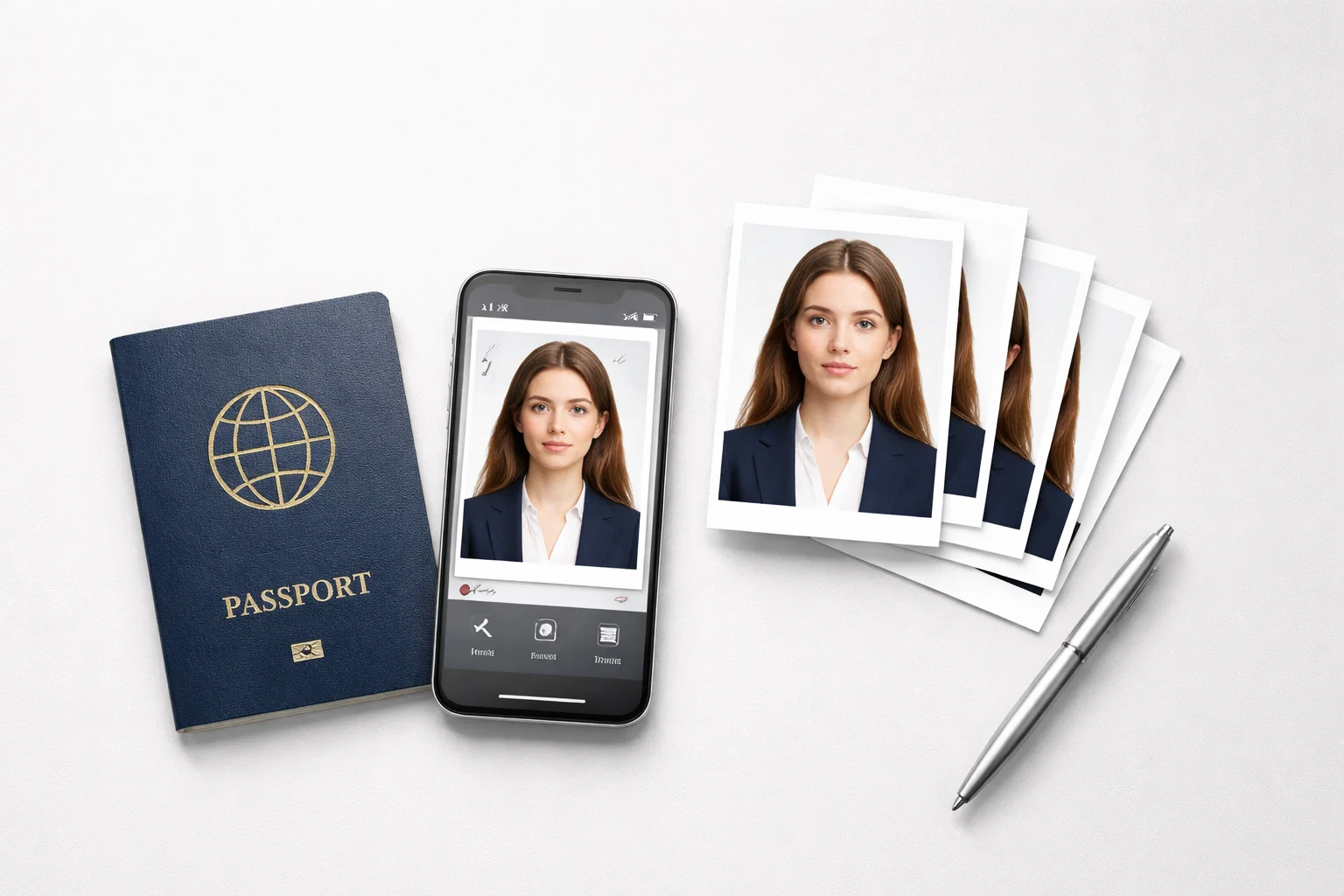
For most people, the answer is no longer a trip to CVS or Walgreens. It is a passport size photo maker online — a tool that sizes and crops the selfie you take at home to the published specification, in minutes and for a fraction of the in-store cost. The agency reviewing your application makes the final decision. But not all online tools are equal. Some simply resize your image and call it a passport photo. Others apply the kind of AI corrections that will get your application flagged. A small number actually do the job properly.
We tested six of the most widely used passport photo maker sites, evaluating each on compliance accuracy, processing speed, ease of use, pricing, privacy, and document coverage. Here is exactly what we found — and which one belongs at the top of your list.
How We Evaluated These Sites
To ensure this ranking reflects real-world performance rather than marketing claims, we applied the same five-point evaluation framework to every service on this list:
Compliance Accuracy — Does the output reliably meet official government requirements? Is the head-to-frame ratio correct? Is the background genuinely white and free of gradients? Does the tool check for these issues or simply leave them to the user?
Processing Speed — How long does it take to go from uploading a selfie to downloading a ready-to-submit file? The benchmark we used was 60 seconds or less.
Ease of Use — Can a first-time user complete the process without confusion on both mobile and desktop? Does the tool require account creation or app installation as a prerequisite?
Price and Value — What does the user actually pay for a compliant, submission-ready photo? Are there hidden steps or upsells that inflate the real cost?
Privacy and Data Security — Is biometric data handled transparently? Is the photo processed locally or uploaded to servers? What does the privacy policy say about data retention?
Each site was tested using the same source photos — including a straightforward selfie taken in good natural light, a photo with slight background shadows, and an infant photo — across U.S. passport, UK passport, and Schengen visa document types.
Quick Comparison: 6 Best Passport Photo Maker Sites at a Glance
| Site | Best For | Free Tier | Compliance Check | Processing Time | Starting Price | Countries |
|---|---|---|---|---|---|---|
| PhotoGov | Best overall | ✅ Yes | ✅ Automated + optional expert | ~30 sec | Free / $5.90 | 200+ |
| Visafoto | Budget-conscious users | ❌ No | ⚠️ Limited | Seconds | $6.99 | 100+ |
| IDPhoto4You | Manual control, free use | ✅ Yes | ❌ Manual only | Minutes | Free | 50+ |
| 123PassportPhoto | High-resolution DIY | ✅ Yes | ⚠️ Basic | Minutes | Free | 50+ |
| Cutout.Pro | Creative flexibility | ✅ Limited | ⚠️ Basic | Seconds | Free / paid | 50+ |
| PassportPhotoWiz | Privacy-first, offline | ✅ Yes | ⚠️ User-verified | Seconds | Free | 15+ |
#1 PhotoGov — Best Passport Photo Maker Online Overall
Website: photogov.net Best for: Any U.S. or international passport applicant who wants the highest first-time acceptance rate with the lowest risk of rejection.
PhotoGov is the clear frontrunner in 2026, and the reason is straightforward: it publishes the clearest account of what it does with the photo: sizing and cropping to the specification, without changes to the face or the background.
That last point is the critical one this year. The U.S. Department of State asks for the original photo, so services that apply AI-based skin smoothing, facial geometry correction or generative background replacement produce photos that do not meet the requirement—even when those corrections look invisible to the human eye. PhotoGov’s philosophy is verification, not enhancement. It checks your photo against official specifications, corrects the format and dimensions, and delivers a compliant file. It does not touch your face, alter your lighting, or modify your features. What you submitted is what the government receives — just properly sized, cropped, and formatted.
What PhotoGov Does
Upload a selfie from your phone browser, desktop browser, iOS app, or Android app — no account creation is required to get started. PhotoGov automatically checks your image against the requirements for your chosen document and country, which spans over 900 document types across more than 200 countries. It validates head-to-frame ratio, background uniformity, eye position, resolution, and color space, then outputs a ready-to-download JPEG file within approximately 30 seconds.
The free tier is genuinely usable. You provide your email address, and a compliant watermark-free photo is delivered within about 40 seconds. For users who need instant delivery the paid express tier starts at $5.90 — significantly less than the $14.99 to $16.99 typically charged at CVS or Walgreens, and that in-store price does not even include a digital file. If a rejection is caused by a technical issue on PhotoGov’s side, PhotoGov covers a free retake or a full refund.
Key Features
- 4.7-star average across more than 3,000 Google reviews, published by PhotoGov on its own website
- 900+ document types including U.S. passport, UK passport, Green Card, DV Lottery, Schengen visa, Canadian passport, Australian passport, and hundreds more
- 200+ countries covered with country-specific compliance specifications
- No facial retouching or AI modifications – the U.S. Department of State asks for the original photo, without changes made by software, apps, filters or artificial intelligence
- Free tier available — no credit card required to access a basic compliant photo
- If the rejection is caused by a technical issue on PhotoGov’s side, such as wrong dimensions or an off-centre head, PhotoGov covers a free retake or a full refund. A rejection caused by the source photo is not covered.
- Photos are processed in PhotoGov’s own automated workflow and are not passed to third-party services
- Infant and baby passport photo guidance built into the tool
- Optional human expert review available as a paid add-on for edge cases
- Processes in approximately 30 seconds — the fastest in the category
- Available on iOS, Android, and any browser — no download required for the web version
PhotoGov Pricing
| Tier | Price | Includes |
|---|---|---|
| Free | $0 | Compliant JPEG via email (40-second delivery) |
| Express | $5.90 | Instant download, full resolution, free retake or full refund if the rejection is caused by a technical issue on PhotoGov’s side |
| Subscription | $9.90/month | Unlimited photos, all file formats, watermark-free |
| Business / Custom | Contact | Custom plans for organizations and frequent users |
Who Should Use PhotoGov
PhotoGov is the right choice for the vast majority of people applying for or renewing a passport in 2026. It is especially well-suited for first-time applicants who cannot afford a rejection delay, families processing multiple passport renewals, travelers with urgent deadlines, and anyone who wants the combination of the lowest price and the highest compliance confidence available in the online passport photo space.
PhotoGov Verdict
Overall Rating: 9.4 / 10
Compliance accuracy is the highest among all tested services. The free tier is a real, usable option rather than a promotional teaser. The no-retouching approach is not just a privacy feature — in 2026, it is the defining difference between a photo that passes and one that gets flagged. The one genuine limitation is the absence of built-in live chat support on the standard tier, which matters if you are working against a hard travel deadline. The optional human expert review add-on addresses this, but it is an additional cost. For nearly everyone else, PhotoGov is the strongest starting point — and for many users, the only tool they will need.
#2 Visafoto — Best Budget Option With Broad Document Coverage
Website: visafoto.com Best for: Experienced users who already understand passport photo requirements and need a fast, affordable resize across a wide range of international documents.
Visafoto has been in the online passport photo space since 2013, which gives it one genuine competitive advantage that newer tools cannot replicate: an exceptionally broad library of document types built up over more than a decade of real-world use. The service supports over 200 document types across dozens of countries, including a number of highly specific ID formats — Pakistan NADRA NICOP cards, Myanmar visa photos, Saudi Arabia e-visa photos through multiple portals — that most competitors simply do not offer.
The workflow is web-based only. There is no dedicated mobile app, though the website functions on mobile browsers. You select your document type, upload your photo, and the system resizes, crops, and adjusts the background to meet the relevant official specifications. Processing happens in seconds.
What Visafoto Does Well
The document library is the headline. If you need a photo for an unusual or highly specific document type, Visafoto is one of the most likely services to support it. The per-photo price is competitive — typically $6.99 to $7.99 for a standard passport or visa photo — and output is delivered quickly even when the system encounters a difficult source image.
The interface is clean and functional. Country and document selection is presented clearly on the homepage, and the upload and crop process is straightforward for users who are comfortable with basic photo tools.
Where Visafoto Falls Short
The significant limitation is the absence of a formal compliance verification process. Visafoto resizes and reformats your photo to match official dimensions, but it does not run a compliance check against biometric standards. There is no human review step, and no tool-side validation of head-to-frame ratio, eye position, or background quality. If your source photo has a slight shadow on the background or your head is positioned slightly outside the acceptable range, Visafoto will not catch it — the rejection happens later, when your application is reviewed.
There is also no dedicated mobile app. For users who prefer an app-based workflow, this is a material limitation. Pricing is also not displayed upfront — you have to upload your photo and progress through the process before seeing the cost, which some users find frustrating.
Key Features
- Over 200 document types across a broad range of countries — one of the widest libraries in the category
- Fast processing — most photos are handled in seconds
- Basic background correction included
- Web-based only — no dedicated app
- No compliance verification or human review
- No formal acceptance guarantee
- Pricing: $6.99–$7.99 per photo (not displayed upfront)
Who Should Use Visafoto
Visafoto suits users who need a photo for an international or less common document type not covered by other services, who already understand what a compliant passport photo looks like, and who are comfortable manually verifying that their source photo meets all specifications before uploading. It is not the best choice for first-time applicants or for anyone who wants the photo checked against the published U.S. Department of State specification before submitting it.
Visafoto Verdict
Overall Rating: 7.1 / 10
Broad document coverage and a fair price point are genuine strengths. The absence of compliance checking or human review is a real risk in an environment where photo rejection rates have increased significantly. Experienced users who know the requirements and need an obscure document type are the best fit for Visafoto. Everyone else should start with PhotoGov.
#3 IDPhoto4You — Best Free Manual Tool for Patient, Detail-Oriented Users
Website: idphoto4you.com Best for: Users who prefer full manual control over their passport photo crop and want a completely free solution with no account required.
IDPhoto4You has been operating since 2009 and has processed more than 11 million passport photos over its history. It is one of the most established free tools in the category, and its longevity is a reasonable signal of reliability. The service is entirely web-based, requiring no app download or account creation, and it supports over 50 countries.
The workflow is manual by design. You select your country and document type, upload a photo, and are taken to a crop page where you manually adjust a crop frame to correctly position your face within the required dimensions. When the crop is set to your satisfaction, you click “Make Photo” and download a printable image suitable for a 4R (4×6 inch) photo print.
What IDPhoto4You Does Well
The tool is genuinely free with no hidden upsells, watermarks, or mandatory account creation. The manual cropping interface gives experienced users precise control over framing and positioning. The service supports babies and infants explicitly, with specific guidance for infant passport photo sessions built into the help documentation. The website is accessible over HTTPS and has a long public track record.
A notable change in recent versions: IDPhoto4You has removed automatic face detection from the crop process, meaning the crop frame must be positioned entirely manually. The service frames this as a deliberate design choice, and for users who want pixel-level control over their output, it is genuinely useful. For users who want a quick, automated process, it is a friction point.
Where IDPhoto4You Falls Short
The manual crop process is the core limitation for most users in 2026. Without automatic compliance checking, there is no safety net for common errors — incorrect head-to-frame ratios, shadows on the background, or slightly off-center positioning. The output quality depends entirely on how carefully the user sets the crop frame, which requires understanding the official requirements in some detail.
The interface is functional but dated in comparison to newer services. There is no human expert review option, no acceptance guarantee, and no mobile app. For users who want confidence that their output will pass government review without becoming experts in biometric photo specifications themselves, IDPhoto4You is not the ideal choice.
Key Features
- Completely free — no account, no payment, no watermark
- Supports 50+ countries
- Manual crop control — full user control over framing
- Web-based, no download required
- Accessible via HTTPS
- Infant and baby passport photo guidance available
- No compliance checking, no human review, no acceptance guarantee
- Interface has not been significantly updated in recent years
Who Should Use IDPhoto4You
IDPhoto4You is well-suited for technically comfortable users who already understand passport photo requirements, want complete control over their output, and have no budget for a paid service. It is a solid free fallback for straightforward applications in countries with clear, stable photo requirements. It is not recommended for first-time applicants, users applying under U.S. 2026 strict standards, or anyone unfamiliar with biometric compliance specifications.
IDPhoto4You Verdict
Overall Rating: 6.8 / 10
Eleven years of operation and more than 11 million photos processed are meaningful trust signals. The fully free, no-account model is a genuine strength. The absence of automated compliance checking — particularly following the removal of face detection — is a significant limitation for most modern use cases. Experienced users who value control over speed will find it useful. Beginners should look elsewhere.
#4 123PassportPhoto — Best for High-Resolution DIY Prints
Website: 123passportphoto.com Best for: Users who prioritize print quality and want a high-resolution output suitable for professional photo printing at home or at a print lab.
123PassportPhoto is a straightforward, free-to-use online passport photo tool that has carved out a specific niche: ultra-high resolution output designed for 600 DPI printing. While most online passport photo tools output images at standard screen resolution, 123PassportPhoto generates files that meet professional print quality standards — which matters if you are printing your photos at home on quality photo paper rather than sending them to a kiosk.
The workflow is simple: upload a JPEG or JPG file under 10MB, use the crop tool to frame your face correctly, optionally apply white background enhancement, and download a printable file sized for a 4R (4×6 inch) print sheet with multiple passport-sized images.
What 123PassportPhoto Does Well
The 600 DPI output specification is the standout feature. For users who want to print professional-quality passport photos at home, this level of resolution ensures that the printed output meets the “printed on photo-quality paper” requirement without the degradation that lower-resolution files often show when printed. The service is free, requires no account creation, and processes quickly.
Country and document type coverage is reasonable, supporting over 50 countries including the U.S., UK, Canada, Australia, France, Germany, Japan, China, India, Brazil, and Singapore. A white background enhancement option helps users whose source photos have imperfectly neutral backgrounds get closer to the plain white requirement.
Where 123PassportPhoto Falls Short
Like IDPhoto4You, 123PassportPhoto relies on manual cropping without automated compliance checking. The user is responsible for correctly positioning the crop frame to achieve the required head-to-frame ratio. There is no face detection, no biometric validation, no human review step, and no acceptance guarantee.
The tool only accepts JPEG files (not PNG or HEIC), which can be a minor friction point for users photographing directly from an iPhone, which defaults to HEIC format. The interface is functional but minimal, and there is no mobile app.
Key Features
- 600 DPI output — among the highest resolution available in free passport photo tools
- Supports 50+ countries including all major passport-issuing nations
- White background enhancement option
- Free with no account required
- JPEG input only — no PNG or HEIC support
- Manual crop — no automated compliance checking
- No human review or acceptance guarantee
- No mobile app
Who Should Use 123PassportPhoto
123PassportPhoto is the right choice for users who want to print their own passport photos at home on quality photo paper and need the highest possible output resolution to ensure print quality. It is a good fit for users in countries with stable, clear photo requirements who are comfortable manually verifying their framing against published specifications. It is not suited for users seeking automated compliance confidence or a guided end-to-end experience.
123PassportPhoto Verdict
Overall Rating: 6.5 / 10
The 600 DPI output specification is a genuine differentiator for home printing use cases. The free, no-account model is a strength. The manual crop-only workflow without compliance checking limits its usefulness for users who want assurance that their photo will pass government review on the first submission. Print-focused users will find real value here; compliance-focused users should use PhotoGov.
#5 Cutout.Pro Passport Photo Maker — Best for Creative Flexibility and Additional ID Features
Website: cutout.pro/passport-photo-maker Best for: Users who want a comprehensive AI-powered toolkit that combines passport photo creation with additional customization options such as suit changes and multi-format output.
Cutout.Pro is a broad AI image editing platform that includes a passport photo maker as one of several tools in its suite. Its passport photo feature covers standard document sizes across dozens of countries — 2×2 inch U.S. passport, 4×6, A4, and other common print sheet formats — and includes automatic background removal, face centering, and image resizing in a single workflow.
The distinguishing feature is the suite of additional capabilities. Unlike dedicated passport photo services, Cutout.Pro allows users to change their outfit digitally using a built-in suit library, which includes men’s and women’s formal suit options in various styles. While this feature has no place in an official U.S. passport submission (clothing changes would fall under the retouching prohibition), it is useful for certain ID photo types in countries where formal attire is expected or for resume and professional ID photos where requirements are less strict.
What Cutout.Pro Does Well
The background removal is AI-powered and fast, producing clean edges with minimal user effort. The multi-format output — including PNG with high quality and JPG with smaller file sizes — gives users flexibility depending on whether they are submitting digitally or printing. The output can be formatted for standard print sheet sizes including 3×4, 4×4, 4×6, 5×6, and A4, which makes it practical for international use cases that require specific print sheet dimensions.
The interface is accessible from a browser with no download required, and the basic passport photo feature is free for standard use cases.
Where Cutout.Pro Falls Short
Cutout.Pro is not a dedicated compliance service. Its passport photo tool does not perform biometric validation against official government standards — it resizes and formats, but it does not check head-to-frame ratios, validate eye position, or verify background compliance against country-specific specifications. The generative suit-changing feature, while creatively interesting, is a liability for U.S. passport submissions in 2026 under the no-retouching policy — users must be careful not to apply any stylistic modifications when using the tool for official government documents.
The platform is broad by design, which means passport photo creation is one function among many rather than the core focus. Users seeking a tool purpose-built for compliance will find better assurance elsewhere.
Key Features
- AI background removal and replacement — automatic white background
- Multi-format print sheet output — 3×4, 4×4, 4×6, 5×6, A4
- Suit and formal attire library for professional ID photos
- Face centering and automatic resize
- PNG and JPG output format options
- No biometric compliance validation
- Free basic tier; paid plans for higher volume and advanced features
- No acceptance guarantee
- Web-based; no dedicated passport photo app
Who Should Use Cutout.Pro
Cutout.Pro is best suited for users who need passport or ID photos for countries with less strict digital submission requirements, professional profile photos for LinkedIn or other platforms, or resume-style ID photos where formal attire presentation is an advantage. For official U.S. passport, UK passport, or Schengen visa submissions, a dedicated compliance service like PhotoGov provides significantly more assurance.
Cutout.Pro Verdict
Overall Rating: 6.3 / 10
A versatile platform with genuinely useful AI tools and strong multi-format output. The absence of compliance checking and biometric validation is a real limitation for official government submissions in 2026. The suit-change feature is interesting for non-official use cases. As a passport photo compliance tool, it trails the dedicated services on this list by a meaningful margin.
#6 PassportPhotoWiz — Best for Privacy-First, Fully Offline Processing
Website: passportphotowiz.com Best for: Privacy-conscious users who want all photo processing to happen locally in their browser, with no upload to external servers.
PassportPhotoWiz occupies a distinctive niche in the online passport photo space: all image processing happens entirely within the user’s browser. Your photo is never sent to a server, never stored in the cloud, and never transmitted outside of your device. For users who are uncomfortable with their biometric facial data being processed on third-party servers — a concern that is entirely legitimate and growing — this is a meaningful practical differentiator.
The tool supports passport photo specifications for 15 major countries including the U.S., UK, Canada, Australia, India, China, Japan, Brazil, Mexico, Russia, South Korea, Taiwan, Schengen area, and a small number of others. Country-specific templates handle dimension requirements automatically, and a precision cropping tool ensures correct face positioning within the required head-to-frame ratio.
What PassportPhotoWiz Does Well
The privacy proposition is the strongest in the category. No photos leave your device at any point in the process — not during upload simulation, not during processing, and not during download. For users processing a child’s photo, a government employee’s photo, or anyone particularly sensitive about facial biometric data, this is a genuine advantage that no server-based tool in this category can match.
The tool is completely free, supports an unlimited number of photos, and requires no account creation. Background removal is included, and high-resolution output suitable for printing is generated directly in the browser.
Where PassportPhotoWiz Falls Short
The country coverage is the primary limitation — 15 countries is a narrow selection compared to services like PhotoGov (200+) or Visafoto (100+). Users applying for documents in countries outside that list will need to use a different tool.
Like most free tools on this list, PassportPhotoWiz does not perform biometric compliance validation. It provides the cropping tool and country-specific dimensions, but whether the resulting photo meets all official requirements — head positioning, background uniformity, lighting evenness — is left to the user to verify. There is no compliance guarantee and no human review option.
Key Features
- 100% on-device processing — no photos uploaded to servers at any point
- Completely free with unlimited photo generation
- No account creation required
- Automatic background removal and white background replacement
- Country-specific dimension templates for 15 countries
- High-resolution output for printing
- No biometric compliance validation
- No acceptance guarantee
- 15 countries only — narrow coverage compared to alternatives
Who Should Use PassportPhotoWiz
PassportPhotoWiz is the right choice for users who prioritize privacy above all else and are applying for a passport in one of the 15 supported countries. It is particularly well-suited for parents creating passport photos for children and anyone in a profession or situation where biometric data handling is a heightened concern. Users who need broader country coverage or a check against the published specification should use PhotoGov, which processes photos in its own workflow and does not pass them to third-party services.
PassportPhotoWiz Verdict
Overall Rating: 6.1 / 10
The on-device processing model is a genuine competitive differentiator and the strongest privacy proposition in the category. The narrow country coverage and absence of compliance checking are the two limiting factors that prevent it from ranking higher. For the specific use case it is designed for — private, free, locally processed passport photos for major passport-issuing countries — it performs that function very well.
2026 Official Passport Photo Requirements: What You Need to Know
Understanding what the issuing authority actually requires is the foundation of choosing the right tool. Here is a consolidated overview of the key requirements for the most common document types.
U.S. Passport Photo Requirements (2026)
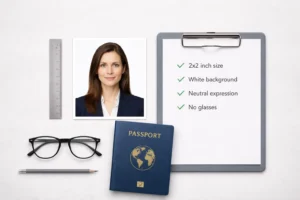
The U.S. requirements below are published by the Department of State. The U.S. Department of State sets the following requirements for passport photos submitted with paper applications (Form DS-11 or DS-82):
- Size: Exactly 2×2 inches (51×51 mm)
- Head size: 1 to 1⅜ inches (25–35 mm) from chin to crown
- Background: Plain white or off-white only — no shadows, patterns, textures, or objects visible
- Expression: Neutral, with eyes open and mouth closed
- Glasses: not permitted, with one exception – if you cannot remove them for medical reasons, include a signed note from your doctor with your application (glasses have not been allowed since November 2016)
- Hats or head coverings: Not permitted except for documented religious reasons
- Lighting: Even, with no shadows on the face or background — no flash shadows visible
- Color: Must be a color photo — no black and white
- Recency: Taken within the last six months
- Paper: Printed on matte or glossy photo-quality paper
- No digital retouching: Any beauty filters, AI-based smoothing, background swapping with generative tools, or facial modification of any kind is prohibited and will result in rejection
Digital Upload Requirements (Online Renewal via travel.state.gov)
For users renewing their passport online through the State Department’s portal:
- Format: JPEG, PNG, HEIC, or HEIF
- Dimensions: the online renewal application does not publish a pixel size. The 600 x 600 to 1200 x 1200 pixel range and the 240 KB limit apply to the digital image uploaded with visa forms DS-160 and DS-1648. For the immigrant visa form DS-260 you bring two printed 2 x 2 inch photos to your interview.
- File size: Between 54 KB and 10 MB
- Color: Must be a color photo
- No compression — use the highest resolution available
- Taken within the last six months
- No Portrait Mode depth effects — these create artificial background blur that can interfere with background validation
UK Passport Photo Requirements (Summary)
The UK requirements are published on GOV.UK.
- Size: 35×45 mm
- Head height: 29–34 mm from chin to crown
- Background: plain and light-coloured. GOV.UK describes the printed photo background as plain cream or light grey; HM Passport Office examiner guidance accepts any plain light colour, including shades of white.
- Expression: Neutral, eyes open, no smiling
- Taken within the last month for UK applications
- Printed on plain white, high-quality photographic paper
Schengen Visa Photo Requirements (Summary)
- Size: 35×45 mm
- Head height: 32–36 mm from chin to crown
- Background: White or off-white
- Expression: Neutral, eyes open
- Taken within the last six months
How to Take a Perfect Passport Photo at Home: Step-by-Step
Taking your own passport photo at home is entirely acceptable under official U.S. guidelines. Done correctly, it produces a photo that meets every government requirement. Here is the process that consistently yields the best results.
Step 1 — Set up your background. Find a plain white or off-white wall. If no suitable wall is available, hang a white bedsheet or use a large sheet of white foam board as a backdrop. The background must be completely uniform — no shadows, no texture, no visible objects. Smooth out any wrinkles.
Step 2 — Use natural light. Position yourself facing a window in a room with bright, diffused natural light. Natural window light produces the most even illumination with the least risk of shadow. Avoid overhead lighting that creates shadows under the chin or nose. Do not use the phone’s flash — it creates harsh shadows on the background that are a common rejection trigger.
Step 3 — Position your camera correctly. Have someone else hold the camera at eye level, approximately four to six feet away. If you are taking the photo yourself with a front-facing camera, use a stable surface or tripod rather than holding the phone. Front-facing cameras are acceptable, but the camera should be at eye level — not above or below — to avoid distortion.
Step 4 — Frame your shot. The frame should show your full face, both shoulders, and space around your head. Leave room around your head: on the finished 2 x 2 inch photo the head must measure 1 to 1 3/8 inches from the bottom of the chin to the top of the head, which is between 50% and 69% of the image height. When you take the source photo, include your head, shoulders and space above the head so the tool has room to crop. Avoid cropping off the top of your head or cutting into your shoulders.
Step 5 — Check your expression. Look directly at the camera with a neutral expression or a natural smile with your mouth closed, no frowning, eyes fully open. Blink deliberately before the shot to ensure your eyes are fully open at the moment of capture.
Step 6 — Take multiple shots. Take at least five to ten photos to give yourself options. Small variations in head position, lighting, or expression can make the difference between an accepted and rejected photo.
Step 7 — Upload to PhotoGov. Upload your best shot to PhotoGov, which will automatically check and format the image against official specifications and flag any issues before you download.
Baby and Infant Passport Photo Tips
Photographing an infant for a passport photo is one of the most challenging applications for any of these tools, but it is entirely doable at home. The official requirements are the same as for adults — full face visible, neutral expression, white background, eyes open where possible — but the practical approach is quite different.
For newborns and very young infants: Lay the baby on their back on a white sheet or white-covered car seat. Stand or sit above the baby and photograph from directly overhead. The background of the entire frame should be white. In these circumstances, partially open eyes are acceptable — the State Department acknowledges that getting a newborn to hold their eyes fully open is not always possible.
For babies who can sit up: Place the baby in a car seat covered with a plain white sheet, positioned against a white wall. This creates a fully white background while keeping the baby safely positioned. Photograph at eye level from a short distance.
Remove any visible hands. One of the most common rejection reasons for infant photos is a visible adult hand supporting the baby’s head. Ensure no hands, arms, or other objects are visible in the frame. Wait until the baby can support their own head to take the photo.
Timing matters. Photograph when the baby is fed, rested, and calm. Post-feeding drowsiness can make it difficult to get a photo with eyes fully open. A calm, alert window is typically the best opportunity.
Take many shots. Infants shift constantly. Plan to take twenty to thirty photos to have a realistic chance of capturing the ideal frame. Upload the best candidate to PhotoGov, which includes specific guidance for infant passport photos in its processing flow.
Frequently Asked Questions
Can I use a selfie for my passport photo? Yes, selfies taken with a smartphone camera are accepted for U.S. passport applications, provided they meet all official requirements: white background, correct head size, neutral expression, even lighting, no filters or modifications. Use the rear-facing camera if possible, as it typically produces higher resolution than the front-facing camera.
Are online passport photo tools legal to use? Yes. Using an online tool to format and resize your photo is entirely legal and fully accepted by the U.S. Department of State, HM Passport Office, and immigration authorities in most countries. What is prohibited is digital retouching that alters your appearance — not using a tool to correctly size and crop your image.
Why was my passport photo rejected? The most common reasons for rejection in 2026 include: incorrect head-to-frame ratio, shadows on the face or background, detected digital retouching or filter application, incorrect background color, photo taken more than six months ago, and technical file issues such as incorrect resolution or file size. PhotoGov’s compliance check is specifically designed to catch most of these issues before you submit.
What is the difference between a passport photo and a visa photo? In the U.S., passport photos and visa photos use the same specifications — 2×2 inch, white background, neutral expression. For other countries, visa photo requirements often differ from passport photo requirements in size, background color, or head proportion. Always verify the specific requirements for the document you are applying for.
Can I wear glasses in my passport photo? No. The U.S. Department of State has prohibited glasses in passport photos since November 2016. Rules differ elsewhere. The UK and Canada accept glasses if both eyes are clearly visible and there is no glare, and neither accepts sunglasses or tinted lenses. In the United States, if you cannot remove your glasses for medical reasons, include a signed note from your doctor with your application. Contact lenses are permitted, but glasses — including tinted, clear, or prescription — are not.
How recent does my passport photo need to be? For U.S. passport applications, the photo must have been taken within the last six months. For UK passport applications, the photo must have been taken within the last month. Always check the specific requirement for the document you are applying for.
Can I smile in a passport photo? Keep a neutral expression or a natural smile, with both eyes open. For a U.S. paper application you can smile with your mouth closed; for online renewal keep a neutral expression or a natural smile without showing teeth. A closed-mouth expression where the corners of your mouth are relaxed and neutral is the correct approach. Open-mouth smiling is not permitted.
What is the best free passport photo maker? PhotoGov is a good free starting point among the services in this list. The current terms of its free tier are published on the PhotoGov pricing page.
Can I print my passport photo at home? Yes, provided you use photo-quality paper (matte or glossy) and print at the correct dimensions (2×2 inches for U.S. passports). Most home printers connected to a print-ready template from PhotoGov or 123PassportPhoto can produce acceptable prints. Alternatively, take the print-ready file to any pharmacy photo kiosk for printing at approximately $0.35–$0.50 per sheet.
How do I know if my passport photo will be accepted? The most reliable way to verify compliance before submission is to use a tool like PhotoGov that runs automated compliance checking against the official biometric standards for your specific document and country. PhotoGov’s compliance validation covers head-to-frame ratio, eye position, background uniformity, resolution, color space, and file size — the factors that most commonly trigger rejection.
Do online passport photo tools share my biometric data? This varies significantly by service. PhotoGov processes your photo in its own automated workflow and does not pass it to third-party services; its privacy policy describes how face data in the iOS app is handled. PassportPhotoWiz processes everything locally in your browser with no server upload at all. Server-based services like Visafoto and Cutout.Pro do upload your photo for processing. Always review the privacy policy of any service you use for biometric data handling.
Final Verdict: Which Passport Photo Maker Should You Use?
The answer depends on what you need — but for most people, the hierarchy is clear.
Use PhotoGov if you want the highest first-time acceptance rate, the broadest document coverage, the best combination of price and compliance confidence, and a tool that sizes and crops the photo without retouching it. The free tier is a real option; the paid tier at $5.90 is the most cost-effective compliant solution in the category. This is the right choice for the overwhelming majority of passport and visa applicants.
Use Visafoto if you need a photo for an obscure international document type not covered by PhotoGov and you are comfortable manually verifying your source photo against the published specifications. The broader document library is a genuine advantage for edge-case document types, but the absence of compliance checking is a meaningful risk for standard applications.
Use IDPhoto4You if you want complete free manual control over your crop and have a solid understanding of passport photo requirements. Best for experienced users who prefer to verify compliance themselves.
Use 123PassportPhoto if you are printing at home and need the highest possible output resolution (600 DPI) for professional print quality.
Use Cutout.Pro if you need ID photos for non-official purposes or international contexts where formal attire presentation is expected and strict retouching rules do not apply.
Use PassportPhotoWiz if privacy is your primary concern and you are applying for a passport from one of the 15 supported countries. The fully on-device processing model provides the strongest data privacy of any tool on this list.
A tool that only resizes the photo without checking it against the published specification leaves the risk with you: size, head position, background and expression all have to match. A photo that gets rejected does not just cost you time — it can delay a passport for weeks at a moment when you may not have weeks to spare. Choose a tool that checks, not just one that crops. For almost everyone reading this, that tool is PhotoGov.